
We set targets. We measure. We make changes.
At NJIE, sustainability starts with people. We work to build an inclusive culture that promotes health, responsibility, and innovation. In parallel, we work systematically to reduce our environmental impact across the entire value chain through responsible sourcing, prioritizing packaging solutions with a higher proportion of recycled material, and science-based climate targets approved by the SBTi—focused on measurable, long-term improvements.
Our three focus areas
Social Sustainability & Health
Sustainable Production & Consumption
Sustainable Business Practices
Social Sustainability and Health
NJIE strives to create a sustainable, safe, and inclusive work environment where employees are offered fair conditions, work–life balance, and opportunities for personal development. Through flexible working solutions, competitive benefits, and zero tolerance for discrimination, the company builds a culture characterized by respect, equality, and engagement. Education and leadership are key elements, with a focus on internal development initiatives, values-driven leadership, and quality-assured recruitment.
NJIE promotes an active and healthy lifestyle through exercise during working hours, health screenings, and wellness initiatives. The overall goal is to create a sustainable workplace where employee well-being contributes to long-term success for both individuals and the organization.
Corporate Culture
Corporate Culture
Working Conditions and Compensation
We are firmly committed to ensuring decent working conditions for all our employees. We offer competitive salaries, attractive benefits, and security through comprehensive pension solutions. By creating a safe and fair working environment where our employees feel valued and secure, we lay the foundation for long-term success for both individuals and NJIE. This is a central part of our sustainability work, where we strive to build a workplace that promotes both employee well-being and the company’s sustainable growth.
Balance for Success
We believe in creating a healthy balance between work and private life, which is crucial for our employees’ health and productivity. Our work is based at the office, where we together build a strong company culture and facilitate collaboration. By working close to one another, we can communicate faster, solve problems more efficiently, and strengthen both engagement and innovation. At the same time, we offer certain flexible working solutions, such as flextime and the option to work remotely one day per week. In this way, we combine the best of both worlds—the proximity and creativity of the office environment with the opportunity for individual recovery and planning.
Work–life balance is part of our sustainability work, where we strive for a working environment that enables a healthy balance between employees’ professional and private lives.
Diversity, Inclusion and Equality
Creating a workplace where diversity and inclusion are central values is a natural part of our sustainability work. We strive for a balanced age and gender distribution as well as equal conditions and opportunities for all employees, regardless of background or experience. Our goal is to build a working environment where everyone feels respected, valued, and has the same opportunity to develop.
We have strict zero tolerance for discrimination and harassment in all forms and actively work to ensure a safe and respectful workplace for everyone.
Training and Leadership
Training and Leadership
Internal training
We are convinced that continuous development is crucial for both our employees’ and NJIE’s success. That’s why we offer all employees various forms of training and skills development, including in leadership and sustainable productivity. Through workshops and values breakfasts, we create an arena where we work together with our core values: Courage, Commitment, Drive, and Participation. These initiatives strengthen both individual development and our shared company goals and are an important part of our sustainability work to build a long-term successful workplace.
Inspiration and partnerships
We are passionate about inspiring an active and healthy lifestyle—both for our employees and for society at large. By participating in events focused on training and health, driving health-related initiatives in our marketing, and collaborating with selected partners who share our vision, we actively spread the message about the importance of physical activity and well-being.
Our aim is to lower the barriers to a more active life and make health easier and more motivating for more people. This commitment is part of our sustainability work, where we strive to influence and inspire long-term, positive changes in both our own and others’ lifestyles.
Quality-assured recruitment
We believe our success is built on recruiting the right people with the right skills and values. That’s why we use quality-assured and structured recruitment processes aimed at ensuring a fair, effective, and sustainable match between candidate and role. From needs analysis to onboarding, we follow a clear methodology that ensures both efficiency and long-term outcomes.
A central part of our process is the use of research-based personality tests and aptitude assessments. By combining objective selection tools like these with competency-based interviews, all candidates are assessed on equal terms based on actual strengths, potential, and ability to contribute to both the team and the company culture.
A Sustainable Workplace
A Sustainable Workplace
Exercise during working hours
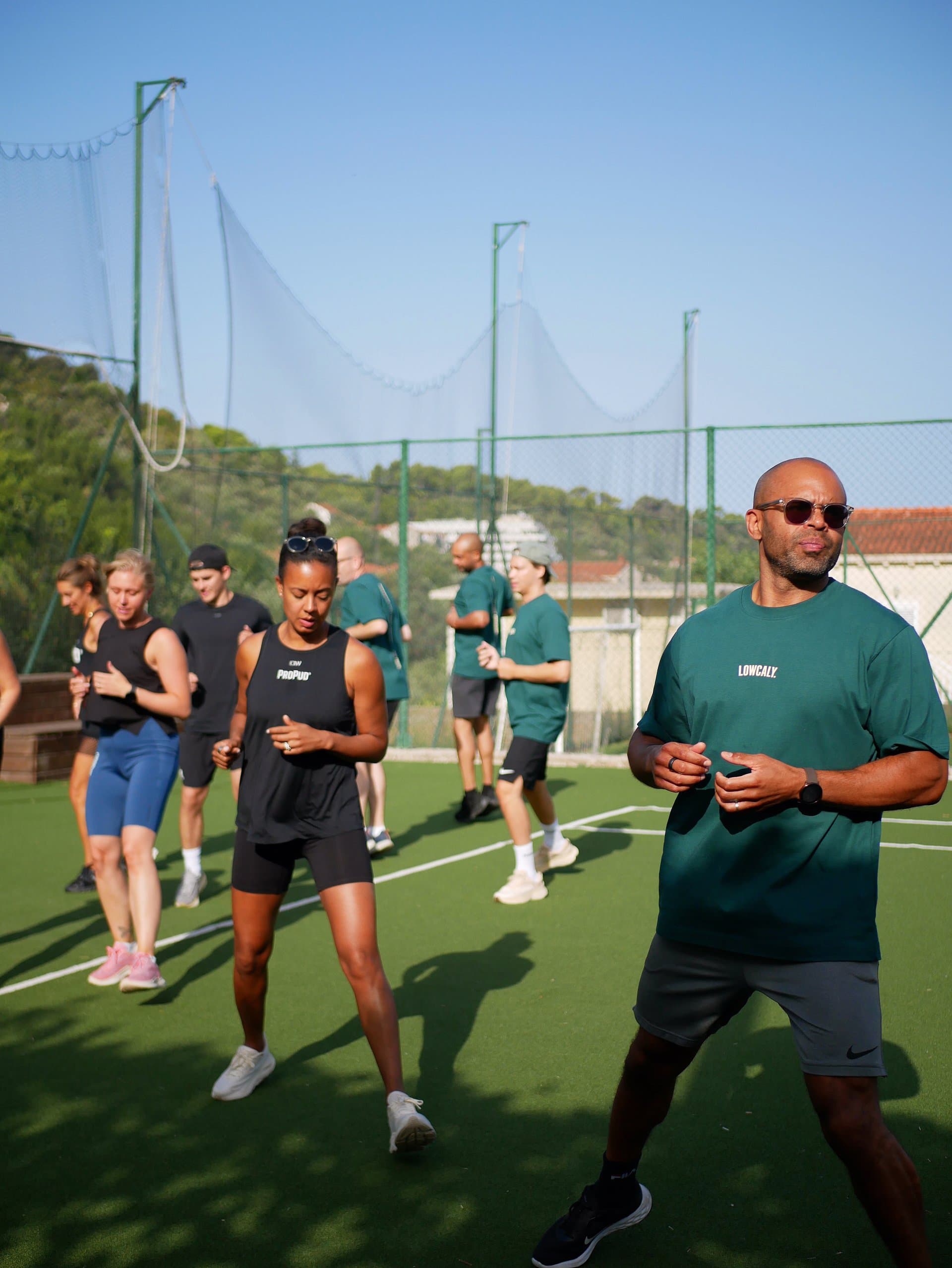
We believe a healthy workforce is a productive workforce. That’s why we offer our employees three hours of paid exercise time per week during working hours, as well as the opportunity to work out on site in our own well-equipped gym. This initiative invests not only in their physical and mental well-being, but also in a sustainable future for our company. Research clearly shows that physical activity reduces stress, increases focus, and promotes a positive work environment, which in turn leads to reduced sick leave and improved performance.
Prioritizing health in the workplace is a natural part of our sustainability work, where our employees’ long-term well-being is in focus. By supporting our employees in living an active life, we contribute to a more sustainable and successful workplace for everyone.
Health checks and wellness
We care about our employees’ health and therefore offer health checks, fitness testing, and a maximum wellness allowance. By giving our employees the tools to take care of their physical and mental health, we create a work environment where everyone can perform at their best.
Health checks, a personal health coach, and fitness testing help us prevent ill health and provide the right support, while the wellness allowance gives employees the opportunity to choose activities that suit their needs. This is part of our long-term work to promote both a sustainable workplace and a sustainable life for our employees.
Engagement and job satisfaction
We believe that a positive and engaged work environment is fundamental to both employee well-being and company success. That’s why we actively work to create job satisfaction by encouraging open communication, collaboration, and personal development. To inspire and motivate our employees, we also offer inspiring lectures that strengthen both competence and engagement.
By offering different opportunities for our employees to grow and thrive, we create a culture where everyone feels valued and motivated to contribute to the company’s shared goals.

Sustainable Production and Consumption
Our sustainability efforts include responsible sourcing, packaging, transportation and business travel. We have set science-based climate targets approved by the SBTi and actively work to reduce emissions across the entire value chain. All raw materials are assessed against strict ethical and environmental criteria, with the goal that all direct suppliers of finished products, raw materials, and packaging materials included in our product range will have signed our Code of Conduct by 2030.
Our packaging is developed with circularity in focus and partly consists of recycled and renewable materials. Within logistics and business travel, we prioritize fossil-free alternatives, electrification, and efficient transport solutions in close collaboration with external partners.
Responsible Sourcing
Responsible Sourcing
Science-Based Climate Targets (SBTi)
At NJIE, we have set ambitious climate targets to contribute to the global transition toward a sustainable future. Our targets have been validated and approved by the Science Based Targets initiative (SBTi), meaning we are working on limiting global warming in line with the Paris Agreement.
“Njie Foods AB commits to reducing its greenhouse gas emissions in Scope 1 and Scope 2 by 42% by 2030, using 2023 as the base year, and to measuring and reducing its Scope 3 emissions.”
Reducing our emissions is a central part of our business strategy, and we look forward to maintaining a close dialogue with our suppliers to take shared responsibility for the climate transition. We also want to inspire and encourage our partners to participate in efforts to limit global emissions. Together, we can create a more sustainable future.
Read our SBTi approval letter here.
Responsible sourcing of raw materials
As part of our sustainability work, we ensure that our raw materials and sourcing follow high ethical and environmental standards. Our product range has been 100% palm oil-free since 2020, and we commit to not contributing to deforestation** by complying with the EU Deforestation Regulation (EU) 2023/1115 (EUDR).
We require our suppliers to take responsibility for ensuring that the animal-derived ingredients used in our products are produced in an ethical manner. This includes sound and healthy animal husbandry based on the principle of preventive animal healthcare and minimizing antibiotic use. Through close collaboration with our suppliers, we promote transparency, sustainability, and ethical working conditions. Our goal is that all suppliers of finished products, raw materials, or materials included in our product range and who have a direct business relationship with NJIE will sign and comply with our Code of Conduct by 2030.
**Applies to high-risk commodities related to deforestation, such as palm oil, soy, cocoa, and paper.
Packaging
Packaging
Sustainable material choices
As part of our sustainability efforts, we actively seek to choose materials with a lower environmental impact. We strive to use less, lighter, and thinner materials without compromising quality. Our ambition is that all packaging will be 100% recyclable by 2030, and we will prioritize recycled or renewable materials where possible.
Our breakfast drink bottles consist of 50% recycled PET and are also part of the deposit return system in both Sweden and Norway, which strongly contributes to increased recycling. Our milkshake bottles have also contained 50% recycled PET since 2022, which was an important step toward a more circular and resource-efficient operation. In 2026, we took another step forward by further improving the milkshake bottles, which now consist of a full 75% recycled PET (excluding cap and sleeve).
To further reduce our environmental impact, we also prioritize the use of FSC-certified paper where possible.
Design for circularity
As part of our sustainability work, we strive to design our products with circularity in focus. We design packaging to facilitate material separation and recycling, making it easier for consumers to sort correctly. By minimizing the number of materials in packaging and using detachable components, such as sleeves on our milkshake bottles, we enable more efficient recycling.
We aim to increase the share of recycled and renewable materials in our products and continuously test new solutions to improve our design with regard to both function and environmental impact.
Plastic minimization
Our sustainability work is ongoing to reduce the environmental impact of our products and packaging. A central part of this is plastic minimization, and we have a clear ambition to increasingly replace virgin plastic in our packaging materials with other alternatives where possible, such as bio-based and biodegradable materials or recycled plastic. Although we do not currently have fully implemented solutions, we actively investigate and evaluate these alternatives to reduce our environmental impact long-term and contribute to a more sustainable future.
To reduce our climate footprint, we have introduced a larger format for three of our milkshakes in carton packaging, offering an alternative to single-use plastic bottles. This is a step in the right direction towards reducing the amount of plastic used per package.
Transport & Logistics
Transport & Logistics
Efficient planning
By carefully forecasting needs and using advanced projections, together with well-founded purchasing decisions, we can minimize unnecessary transport and thus reduce the number of trucks on the road, which ccould lower emissions. Our transport planning is optimized not only for maximum efficiency but also to ensure we always use resources in the best way—at the right time and in the right quantities. This is a crucial factor in reducing our ecological footprint.
We collaborate with logistics partners who share our sustainability commitment and work together to continuously find new, more efficient ways to transport our products—both locally and globally.
Sustainable logistics
We work systematically to reduce our climate impact from transport. Among other things, we do this by working with our external transport partners to increase the share of deliveries carried out using electric vehicles, biogas, or other verified fossil-free alternatives. At the same time, we aim to reduce energy use per delivered unit, including through smart route planning and energy-efficient vehicles.
Our aim is to phase out fossil fuels in our transport operations entirely by 2030 at the latest, and we are monitoring progress on an ongoing basis. To ensure real climate benefit, we aim to use only traceable and sustainably produced fuels. We also work closely with our transport suppliers to support their transition, for example through long-term agreements.
Business travel and company cars
Our sustainability work covers the entire business, including how we travel for work. We actively work to reduce the climate impact of business travel by prioritizing digital meetings where possible, especially for internal and recurring meetings.
When travel is necessary, we primarily choose alternatives such as trains and public transport. Flights are used only when business-critical and when other alternatives are not reasonable. We monitor flights and climate impact and report our emissions annually. Where air travel cannot be avoided, we focus on reducing emissions by choosing shorter flight routes or direct flights, and we fund climate projects linked to our air travel, as a complement to our emissions reduction efforts..
For our company cars, we have set a goal of reaching 100% electrification by 2030. All new cars purchased or leased from 2027 onward will be fully electric—an important step in our work toward a more sustainable and climate-smart future.
Sustainable Business Practices
For us at NJIE, quality, safety, and responsibility are the foundation of everything we do—from the selection of ingredients to risk analyses, certifications, and clear labeling, ensuring consumers can feel confident in our products. We communicate responsibly and transparently and avoid misleading claims.
To reduce environmental impact, we actively apply circular principles, including taking producer responsibility, reducing food waste, and optimizing inventory management. Surplus is donated primarily to charity, and we offer packaging sizes that help consumers reduce their own waste. Through data-driven processes and continuous improvements, we strive to make resource use more efficient throughout our production.
Products You Can Trust
Products You Can Trust
Quality
At NJIE, we combine great taste with high quality and responsibility. We select our ingredients carefully and work with suppliers who share our view on sustainability and quality. Our IP Food Certification ensures that product safety is always in focus. For us, it is a given that you as a consumer should be able to trust what you eat.
We believe it is possible to make conscious choices without compromising taste. By combining enjoyment with responsibility, we want to offer products that satisfy in the moment while also considering the future. If something does not meet our requirements, we register deviations and address them in close cooperation with our suppliers. In this way, we continuously improve and ensure we live up to our promises of quality and responsibility.
Risk Analysis to Minimize Errors and Recalls
We conduct regular and systematic risk analyses throughout our operations to identify potential deviations early. The purpose is to minimize the risk of errors, safety shortcomings, and product recalls before they occur. When risks or deviations are identified, we have clear action plans that enable swift and effective measures. Our processes are evaluated and improved continuously to ensure every product meets both our quality requirements and customer expectations.
This preventive approach strengthens product safety and reliability. It also ensures we are well prepared to act quickly and in a structured way if an issue should arise. Quality and sustainability are central to everything we do, contributing to increased confidence among both consumers and partners.
Responsible Marketing and Labeling
We strive for all our marketing communication to be transparent, fact-based, and free from misleading claims about nutritional content, health, or environmental impact. Our information and labeling are designed to be clear and easy to understand, enabling consumers to make conscious and well-informed choices. To promote sustainable consumption habits, we provide clear guidance on proper storage and best-before dates. We encourage reduced food waste through practical tips and clear guidance.
Sustainability initiatives highlighted in our communication are presented responsibly and without exaggerating effects. We avoid vague terms and ensure all sustainability claims can be verified with relevant data. Our packaging is also labeled with clear recycling information to make it easier for consumers to sort correctly and contribute to a more circular resource system.
Circular Economy
Circular Economy
Producer responsibility
We take our producer responsibility seriously and work long-term to contribute to a circular economy. This means we do not only focus on the product life cycle, but also take responsibility for ensuring that our packaging is collected and recycled properly. As members of approved producer responsibility organizations, we take financial responsibility for ensuring that used packaging is handled efficiently. This includes collection, sorting, and recycling so that materials can be reused in new products instead of becoming waste. The purpose of producer responsibility is to reduce littering, prevent unnecessary waste, and ensure that resources that are used are recycled in a sustainable way. Through this work, we help close the loop and reduce our impact on the environment.
Minimizing food waste
We work systematically to minimize both packaging waste and food waste throughout our operations. Through carefully planned processes, we ensure that waste is prevented at every stage—from production and transport to storage and office operations.
By ensuring high product quality and long shelf life, we can optimize inventory levels and reduce the risk of food having to be discarded. When surplus does arise, we primarily donate products to organizations such as Matmissionen. In this way, we create value where the need is greatest while contributing to a more circular food system.
Our goal is to keep food waste, destruction, and disposal of products and materials below 1 percent per year.
To help our customers reduce their own waste, we offer portion and packaging sizes adapted to different needs, making it easier to consume thoughtfully.
Optimizing inventory and production
We work continuously to optimize our inventory management to have the right products in the right place at the right time. The goal is to reduce the risk of overproduction and unnecessary food waste. By using data-driven forecasting tools and analyzing sales patterns, we can better adapt production to actual demand. This enables us to avoid excess inventory while ensuring our products remain high quality and reach customers fresh.
By continuously improving our planning and production processes, we contribute to more efficient and responsible food handling. This is a concrete step in our work to reduce waste and use raw materials, energy, and transportation as resource-efficiently as possible.